Dhaulagiri Circuit Trek - 20 Days

Good to Know
  • Duration 20 Days
  • Trip Grade Moderate
  • Starts/Ends Kathmandu to Kathmandu
  • Group Size 2-10
  • Max. Altitude 5,360m
  • Best Season March, April, May and September, October, November

Highlights

  • Visit numerous UNESCO World Heritage Sites in the Kathmandu Valley, such as Pashupatinath Temple, Swayambhunath, Boudhnath, and Durbar Squares. footprints
  • An opportunity to leave your footprints on one of the least trodden Himalayan trekking routes of Nepal.
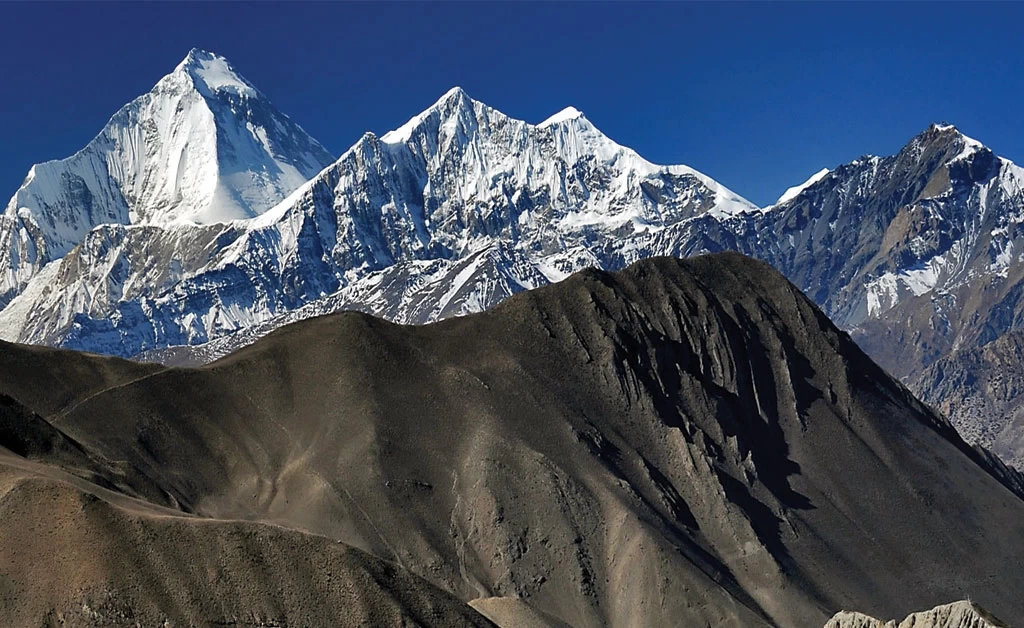
  • Walk amidst the beautiful mountain ranges of Annapurna, Tukuche, Nilgiri, and,, of course, behind Mt. Dhaulagiri (8,167 m).
  • A greater exposure to the real Gurung and Magar culture, simple, warm, and genuine, with a deep connection to nature and mountains.
  • Explore the unspoiled and pristine side of the larger Annapurna Conservation Area,, a true Himalayan escape from modern hustle and bustle.
  • Adventurous high mountain pass crossings also serve as some of the best viewpoints with 360-degree views of surrounding peaks: French Col (5,360 m) and Dhampus Pass (5,240 m).
  • A balanced teahouse and camping-style expedition are alike a high-altitude trek.
  • Make it to the base camp of the 7th-highest peak in the world, Dhaulagiri Base Camp (4,700m).
  • Hidden Valley evokes the real Himalayan wilderness in a serene location.
  • Glacier walking and staying at Glacier Base Camp, and more.

Trip Overview

The Dhaulagiri Circuit Trek of 20 days is one of the longest and toughest high-altitude treks in Nepal. Circumnavigating the 7th-highest mountain in the world, Mt. Dhaulagiri (8,167 meters/26,795 ft), what makes the Dhaulagiri Circuit Trekking Trail special is its unspoiled natural and cultural beauty as one of the least-trodden Himalayan treks in Nepal. Right from the start of the Dhaulagiri Circuit Trekking itinerary, you can enjoy superb, diverse scenery.

Get ready to embrace a wide range of Nepalese people and terrains, from subtropical jungle to a geographic extension into the high, dry Tibetan Plateau. The mix of lush vegetation, massive mountain peaks, and numerous tiny yet beautiful villages makes every step into the Dhaulagiri Circuit Trek route worthwhile. Starting from Beni in Myagdi district and towards the east, which is home to a mix of Magar and Gurung people, we are here to ensure you hassle free experience.

While the Dhaulagiri Circuit Trek itinerary is already the best due to the dedicated spare days for ample acclimatization, so you do not experience altitude sickness, we are also happy to offer a customization option. We are flexible and do our best to meet your preferences and requirements. This means the exact Dhaulagiri Circuit Trek Cost may vary based on the changes made, but it is, however, reasonable overall.

Bookings are now open for 2026 and 2027. Reserve your seat early or with a group of more than 10 members and get to enjoy special discounts on this Dhaulagiri Circuit Trekking Cost, including for the years 2026 and 2027. Based in the heart of the Kathmandu Valley, Thamel, our more than two decades of experience make us a reliable travel companion in Nepal. Your safety is our top priority. Contact us now to save your spot!

Things to anticipate on the trekking route to complete the Dhaulagiri Circuit Hike

The Dhaulagiri trail follows the Myagdi Khola, a river that drains the southern side of the Dhaulagiri massif. Passing through the settlements of Darbang and Muri, the country is still quite heavily populated with scattered villages and farming land. Beyond Muri, the river swings north, and the landscape becomes much more rugged and sparsely populated. The tree line is reached just below the site of the Italian base camp.

Like this, the Dhaulagiri Circuit Trekking offers you a true Himalayan wilderness behind Mt. Dhaulagiri into the trans-Himalayan region, a rain shadow area that has yet to receive a number of adventurers like other popular treks in Nepal do, such as the Everest Base Camp Trek, the Annapurna Base Camp Trek, and the Langtang Valley Trek. Crossing several passes further can add to the challenges and, hence, is recommended for seasoned trekkers rather than first-timers.

Where does the Dhaulagiri Circuit Trek take you?

The Dhaulagiri Circuit Trekking route falls within the Annapurna Region, which is further famous for high altitude treks such as the Annapurna Circuit Trek, Khopra Danda Trek, Mardi Himal Trek, Ghorepani Poon Hill Trek, and, of course, the Annapurna Sanctuary Trek. But the Dhaulagiri Circuit Trek Trail has more remote and dramatic parts. Fewer trekkers even during the peak trekking seasons of spring and autumn.

Trekkers follow the Myagdi Khola Valley and are to make it to the Dhaualgiri Base Camp just below the towering peaks at the center of glaciers and stunning alpine landscapes, in stark contrast to what you experienced in the lower region and villages. Deep into the high Himalayas guarded by Mount Dhaulagiri, before you descend into the beautiful Kali Gandaki Gorge, also famed as the deepest gorge in the world.

Why is it a luxury to get a teahouse on the circuit trekking route to Dhaulagiri?

There are hardly any larger villages on the Dhaulagiri Circuit hiking route, let alone the teahouses. Beni, Darbang, Dharapani, Muri, Bogohara, Dobhan Kharka, Salla Ghari, Yak Kharkha, and Marpha are here, but most of these features with sparse human settlements lie quite far from each other. That is why a teahouse itself is a luxury in itself, as is the fulfillment of daily nutrients and safer drinking water, which is lukewarm boiled water.

But it is also what provides the right ambience for a more intimate experience, not spoiled by the modern era's rapid urbanization, chaos, and pollution. Throughout the Himalayan trip to complete the 20-day Dhaulagiri Circuit Trekking, you get to see the real lifestyle of two indigenous communities of Nepal native to the Himalayan region: the Magar and the Gurung. Content in their own world of hills and Himalayas, they are simple and welcoming.

Is this trip suitable for wildlife sightseeing and photography?

Most of the trekking to circumnavigate Mt. Dhaulagiri, as the name suggests, goes through the Annapurna Conservation Area for being a home to a wide range of flora and fauna, including a diverse landscape from lush subtropical to alpine meadows and almost desert-like landscapes as you go higher in sharp contrast to the snow-blanketed mountain ranges perching above the sky; there’s a lot to see and capture in your lenses.

Therefore, yes, the Dhaulagiri Circuit Himalayan Trip does cater to individuals also keen on wildlife and photography. On a lucky day, you may even come across rare and elusive species of snow leopard, Himalayan musk deer, blue sheep, Himalayan tahr, Himalayan black bear, and red panda. Listen to your guide, and if it is your core area of interest, communicate so they can introduce you to the most scenic spots and places with higher chances of wildlife sightseeing.

Do you cross high mountain passes during the trek to complete the Dhaulagiri Circuit?

Yes, you do cross multiple high mountain passes to complete the Dhaulagiri Circuit Trekking of 20 days. These passes, along with being physically demanding and often regarded as the real challenging phase, are also the ones that reward you immensely if you have trained yourself for it. French Pass and Dhampus Pass are both located 5,000 m above sea level, so to make it through here safely, proper acclimation is a must.

Trekkers begin earlier than usual, so you do not have to face the strong afternoon wind, and also so that you get to relish the magical sunrise over the glazing mountains and then slowly descend to the green valleys and villages. However, the high mountain pass trails of the Dhaulagiri Circuit Trek also tend to be colder, often snowy, and have sharp ascents at first and later on full of descents. Get ready to push your limits.

Which mountains are visible while on the Dhaulagiri Circuit Trek Trail?

You can see several mountain ranges on the Dhaulagiri Circuit Trekking route. Along with Nilgiri and Tukuche Peak, views of multiple 8,000 m peaks ensure you a visual retreat. Annapurna, Manaslu, and, of course, Mount Dhaulagiri and its ranges II, III, and IV. These peaks look further refined from high-altitude landmarks such as Italian Base Camp, Swiss Base Camp, Japanese Base Camp, Dhaulagiri Base Camp, French, and Dhampus Pass.

No need to worry; our 20 days Dhaulagiri Circuit Trek itinerary promises that you get all the golden chances to make the best out of all of these. Breathe in and take in all the unforgettable, one-of-a-kind scenery that only a few get to see; the sights combined with the warm hospitality of the locals do make up for all the hardships. The unpredictable Himalayan weather and challenging geographical conditions give you a taste of mountaineering.

Why is the Dhaulagiri Circuit Trekking Itinerary of 20 days the best? The cost for 2026 and 2027

It is because the 20 days of the Dhaulagiri Circuit Trek itinerary allow a well-paced, hassle-free experience with at least one buffer day at Italian Base Camp; it is taken as the best route, including for the years 2026 and 2027. Or you may choose our customization option. We are flexible and do our best to craft a personalized journey for you that matches your fitness level, preferences, and requirements. Let us plan your perfect Himalayan gateway.

Our Dhaulagiri Circuit Trekking Cost takes care of all the essential expenses such as meals, lodges, transportation, permits, a guide (their salary, insurance, trekking gear, and equipment), and also camps when needed. Changes to the itinerary and services mean fluctuations in the Dhaulagiri Circuit Trek cost. It is transparent, and we are happy to match the prices if it maintains your safety and seamless experience from start to end as we do!
Itinerary
Expand AllCollapse All

On the 1st day, as you arrive at the Tribhuvan International Airport, one of the officials from Adventure Himalayan Travels and Treks greets you and also takes you to your hotel in Kathmandu. If morning arrival, rest is for afternoon exploration of Thamel, in the evening, there is a trip briefing and welcome dinner with the team.

  • AccommodationThree-Star-Hotel
  • MealsWelcome-Dinner
  • Max. AltitudeApprox. 1,400m

Kathmandu Valley includes several UNESCO World Heritage Sites, including Pashupatinath and the Buddhist stupa in Boudhanath. You can also visit Swyambhunath( Monkey Temple), which is 2000 years old. Finally, Patan, the city of fine arts. In the afternoon, you will be meeting with your trekking guide and will check all the necessary things. Overnight stay at the hotel.

  • AccommodationApprox. 1,400m
  • MealsBreakfast
  • Max. AltitudeThree-Star-Hotel

After taking an early breakfast in the hotel, you head out for our journey. The scenic bus drive will take 9-10 hours with a stop along the way for lunch and snacks. Beni is at the confluence of the Myagdi Khola and the Kali Gandaki Camp. It is the district headquarters, so you will have the trekking permits checked there, and eventually, you will make it to Beni.

  • AccommodationLocal-Lodge
  • MealsBreakfast
  • Max. AltitudeApprox. 1,400m

From Beni, you drive to Darbang, which is off-road, so you share a jeep. The drive is a joyous adventure in itself along the Myagdi Khola. Along the way, there is a popular hot spring. If you have an interest, you may stop and take a dip in these healing waters. The trail passes through villages and rice paddies until you arrive in Darbang.

  • AccommodationLocal-Lodge
  • MealsBreakfast
  • Max. Altitude1,110m

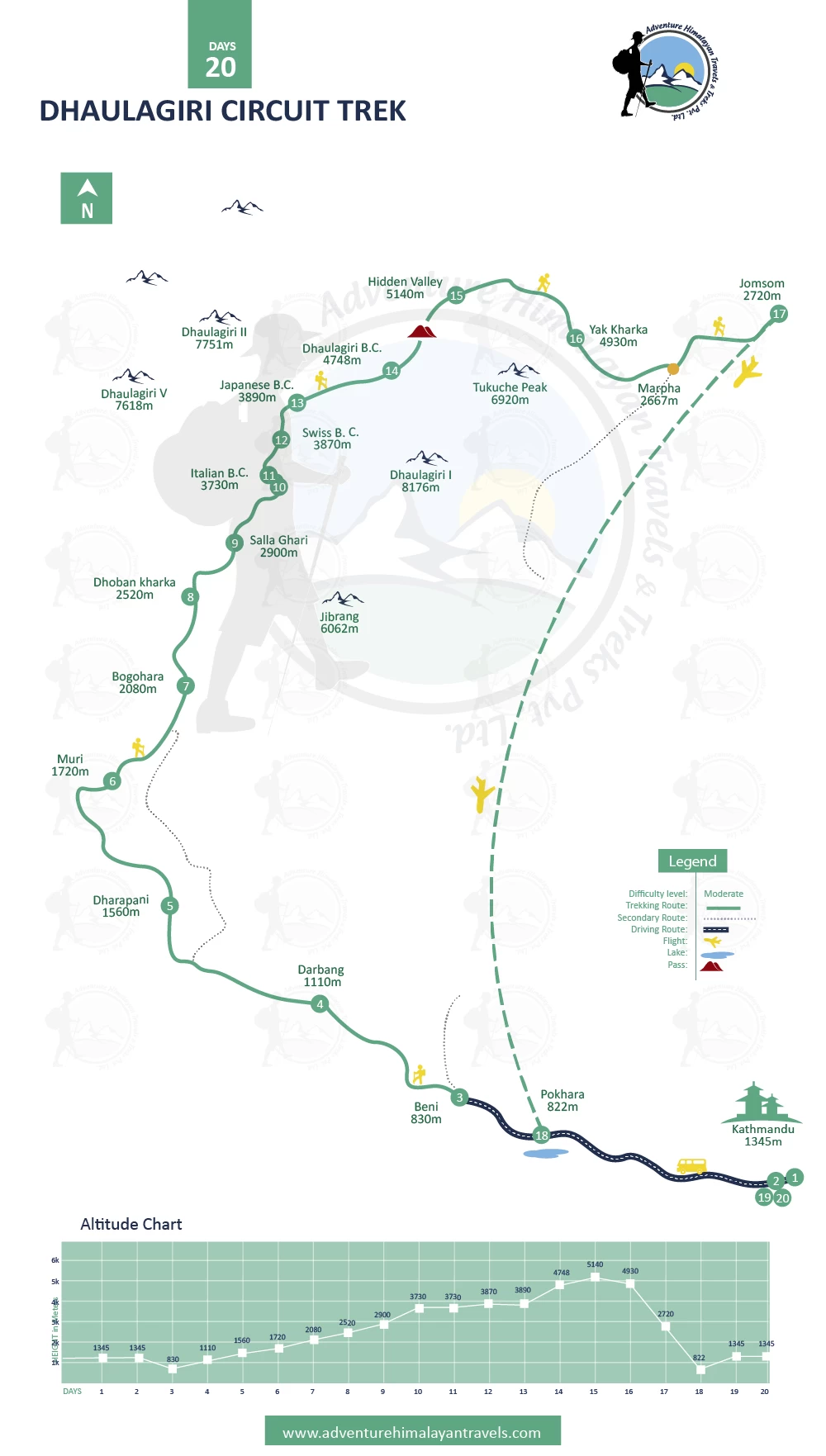
Today is when you will officially begin walking on foot, and the destination of the day is Dharapani. The trail continues along the bank of Myagdi Khola until Phedi. After lunch, the trail goes uphill for two hours through pine forests to reach Dharapani, one of the biggest villages in the area, a perfect place to get a taste of serene Himalayan air.

  • AccommodationLocal-Tea-House
  • MealsBreakfast-Lunch-Dinner
  • Max. Altitude1,560m

After crossing the river to its west bank, leaving Phedi is a steep uphill climb and then many switch-backs until you arrive at the ridge. Again, the trail climbs steeply to the village of Muri, from where you make it to Sibang and Mattim. From here descends to the Gatti Khola, reaches Phalai Gaon (1810 meters), crosses the Dhara Khola, and finally Magar village of Muri.

  • AccommodationLocal-Tea-House
  • MealsBreakfast-Lunch-Dinner
  • Max. Altitude1,720m

Like usual, the day begins after breakfast. Cross a stream and continue through terraced fields before climbing a ridge to reach the pass. Descend to the Myagdi Khola and trek along the riverbank to the village of Naura, where it will climb a steep slope with switchbacks and then descend through a forest before arriving at the terraced fields of Boghara (2080 meters).

  • AccommodationLocal-Tea-House
  • MealsBreakfast-Lunch-Dinner
  • Max. Altitude2,080m

The trail to Dhoban Kharka from Bogohara at first descends through terraced fields to a small ridge and then through a forest to Jyardan, the most remote permanent settlement in these parts. After Jyardan, a high winding path crosses a rocky area and then descends before climbing again to Lipshe. After Lipshe is Lapche Kharka and then climbs to Doban Kharka.

  • AccommodationLocal-Tea-House
  • MealsBreakfast-Lunch-Dinner
  • Max. Altitude2,520m

After crossing a wooden bridge out of Dhoban Kharka, the trail ascends to a forested area. Soon, the west face of Dhaulagiri I (8167 meters) becomes visible. Descend to the Myagdi Khola and cross it via a wooden bridge to the east bank and continue to Chartare. Passing through forests again, across a rocky area, and across a stream to Choriban Khola. Overnight in Salla Ghari.

  • AccommodationLocal-Tea-House
  • MealsAll-Three-Meals
  • Max. Altitude2,900m

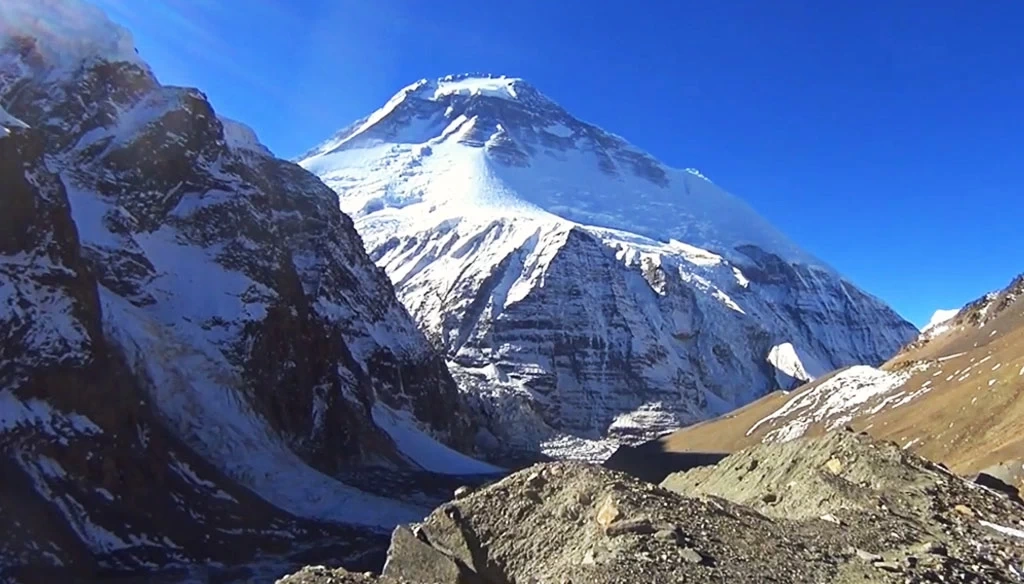
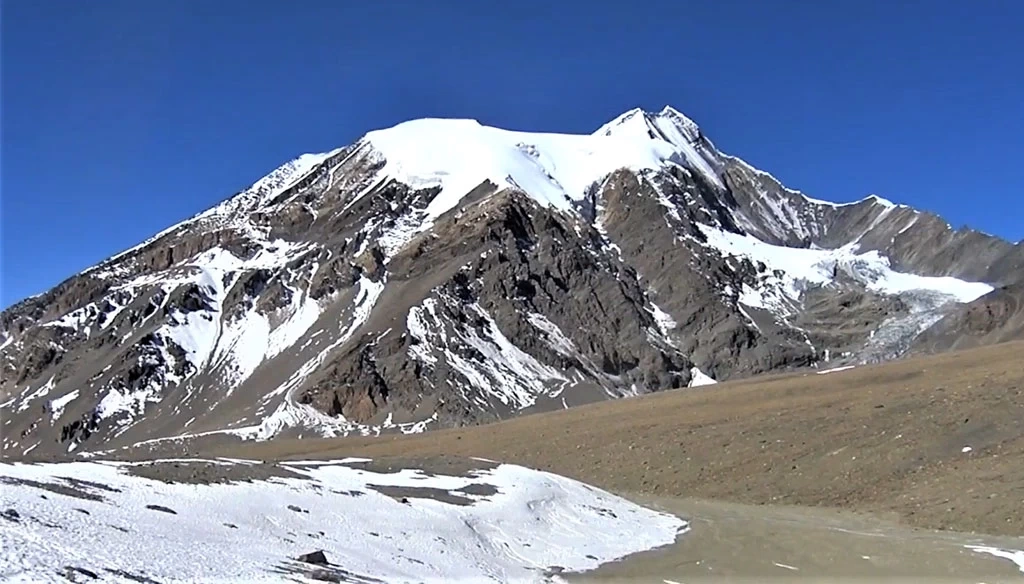
After breakfast, you follow the trail to the moraine of the Chhonbarban Glacier and step onto it from the right-hand side. Tukche Peak (6837 m) becomes visible straight on, while at the far end, the impressive north flank of Dhaulagiri I (8167 m) dominates the skyline. After a short while, you will reach Italian Base Camp (3,730 meters), the campsite for the night.

  • AccommodationCamping-Tent
  • MealsAll-Three-Meals
  • Max. Altitude3,730m

On continuous ascent to high-altitude landmarks, trekkers can experience altitude sickness; therefore, it is the much-needed rest and acclimatization day. You may use this day hiking up and sleeping low to follow the golden rule if your health supports it. Otherwise, it is also okay to explore the surroundings, take ample rest, and prepare for the next day's trip.

  • AccommodationCamping-Tent
  • MealsAll-Three-Meals
  • Max. Altitude3,730m

Wake up early in the morning when the weather is expected to be clear. The trail is a bit prone to stonefall, so proceed with caution. Pass through a narrow gorge, and after a couple more hours, you reach the Swiss Base Camp and stay near the glacier. Clear skies under the twinkling stars, surrounded by mind-blowing peaks, peak adventure!

  • AccommodationCamping-Tent
  • MealsAll-Three-Meals
  • Max. Altitude3,870m

Another short day as you climb up above four thousand meters. Leaving camp, the trail now crosses a rocky area, traversing a steep slope and climbing abruptly to cross the moraine of a glacier that flows down from Dhaulagiri itself. Beyond the glacier, you reach a wide grassy area in a shallow valley. This is the campsite known as ‘Japanese Base Camp.'

  • AccommodationCamping-Tent
  • MealsAll-Three-Meals
  • Max. Altitude3,890m

Brace yourself; you make it to the base of the 7th-tallest mountain on Earth, Dhaulagiri Base Camp. One of the most memorable and adventurous days awaits. From here, you can look up at the impressive north face of Dhaulagiri I (8167 meters). To the west are the peaks of Dhaulagiri II (7751 meters), Dhaulagiri III (7715 meters), and Dhaulagiri V (7618 meters).

  • AccommodationCamping-Tent
  • MealsBreakfast-Lunch-Dinner
  • Max. Altitude4,748m

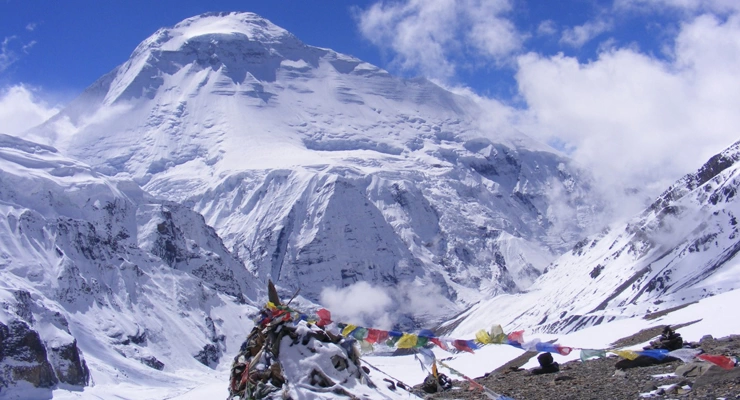
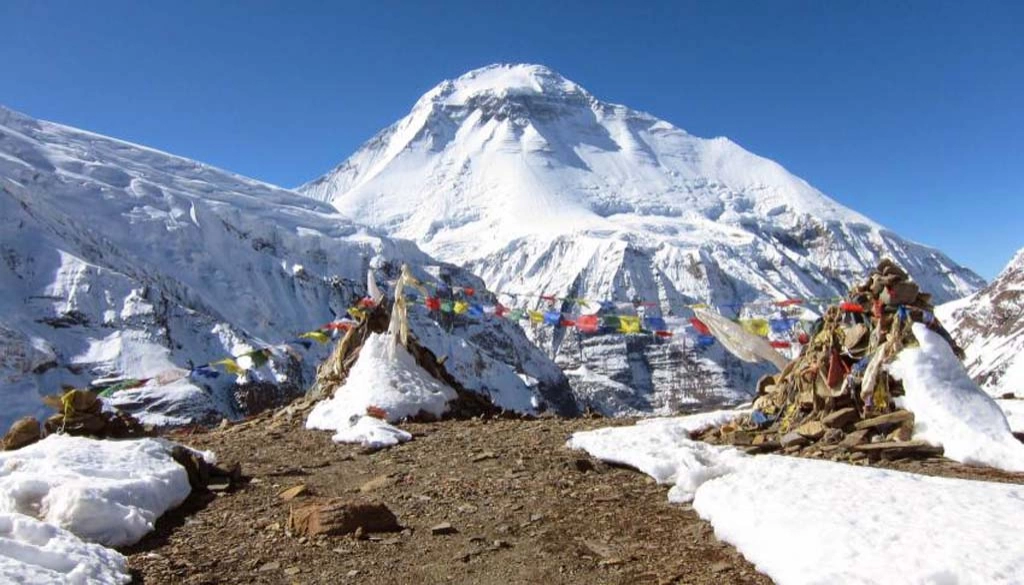
After the glacier, you climb two terraced hills, the first of which runs along the glacier. Then cut across a mountain flank and a moraine to begin a gentle incline from the valley. Climb this gentle slope to the French Pass (5,360 meters). A great vista opens up, and you move ahead to Thapa Pass, and a descent takes you to a camping spot at Hidden Valley.

  • AccommodationCamping-Tent
  • MealsAll-Three-Meals
  • Max. Altitude5,360m

As you hike to make it to Yak Kharka from Hidden Valley, you rejoin the Annapurna Trekking Trail. In between is also the crossing of Dhampus Pass (5,240m), from where it is a descent to Yak Kharka, a beautiful area with grassy meadows and grazing land, a perfect campsite, and perfect to enjoy the surrounding scenery and greenery.

  • AccommodationLocal-Tea-House
  • MealsBreakfast-Lunch-Dinner
  • Max. Altitude5,240m

Descend to the village of Marpha on the west bank of the Kali Gandaki River. Marpha is home to many apple orchards as well as many other fruits. Apple Brandy is a local specialty that you may be lucky enough to taste en route. Continue north, up the river valley to the town of Jomsom, lively and now with various amenities.

  • AccommodationLocal-Tea-House
  • MealsAll-Three-Meals
  • Max. Altitude2,650m

An early 20-minute flight to Pokhara, a lovely valley at the foot of the Machapuchare, so you get spectacular views of the mountains from all parts of the town. There are some fun walks or bicycle rides from Pokhara, or you can swim and canoe on Lake Phewa, or just watch the last rays of the sun stream across the dip in the mountains that hold the lake.

  • AccommodationStandard-Hotel
  • MealsBreakfast-Lunch-Dinner
  • Max. Altitude2,720m

A warm breakfast, and you bid goodbye to the serene Pokhara city of Nepal with a tourist bus to Kathmandu, enjoying the scenery along the way. The bus will stop several times for snacks and lunch. In about 7-9 hours, you would have made it to Kathmandu and later on enjoy a celebratory dinner with your team.

  • AccommodationStandard-Hotel
  • MealsBreakfast
  • Max. AltitudeApprox. 1,400m

We hope you enjoy your Himalayan trips with us and hope to see you back for another adventurous journey. Three hours before your flight to your next destination or hometown, a representative from Adventure Himalayan Travels and Treks helps you with packing and also drops you off at the TIA gate. Have a safe journey!

  • MealsBreakfast

This itinerary is not suited for you? Plan your own trip.

Route Map
Dhaulagiri Circuit Trek - 20 Days Map
What's Included
Includes
  • 15 nights and 16 days of food and accommodation during trek ( tent,local lodge)
  • Transportation from Kathmandu to Beni by bus, Beni to Darbang by jeep, Jomsom to Pokhara by flight, and back to Kathmandu from Pokhara
  • English speaking local expert guide, porters(porter carry maximum 20 k.g and one porter between two person)
  • Trekkers’ Information Management System (TIMS) fees
  • Annapurna Conservation Area Permit
  • Dhaulagiri permit
  • Three nights’ accommodation in Kathmandu at bed and breakfast, one night accommodation in Pokhara at bed and breakfast
  • Airport transfers and escort
  • Farewell dinner in Kathmandu
  • Equipment & clothing for porter & staffs
  • Equipment (sleeping bag, first aid kit, oximeter etc.)
  • Insurance for all staff & porters.
  • Tent, sleeping bag, mattress, and other equipments for camping
  • Trekking achievement certificate
  • Adventure Himalayan Tshirt
Excludes
  • Nepal visa - Multiple Entry 30 days - USD 50  (Details in Visa Page)
  • International flight
  • Insurance for clients (i.e. helicopter evacuation, etc.)
  • Lunch & dinner during hotel stay in Kathmandu and Pokhara
  • Electronic charging fees at guest houses during the trek
  • Hot shower during trek
  • Alcoholic drinks, candies, etc.
  • Extra accommodation and meals outside of itinerary
  • Personal gears & clothing (available on hire)
  • Tips, any expenses incurred in emergency evacuation/road block due to any reason, table drinks, snacks while walking. 
Dates and Prices
Date PriceAvailability 
Start DateStarts: MondayMar 16, 2026End DateEnds: SaturdayApr 04, 2026PricePriceUS$2275StatusStatusAvailable
Start DateStarts: ThursdayMar 19, 2026End DateEnds: TuesdayApr 07, 2026PricePriceUS$2275StatusStatusAvailable
Start DateStarts: MondayMar 23, 2026End DateEnds: SaturdayApr 11, 2026PricePriceUS$2275StatusStatusAvailable
Start DateStarts: ThursdayMar 26, 2026End DateEnds: TuesdayApr 14, 2026PricePriceUS$2275StatusStatusAvailable
Start DateStarts: MondayMar 30, 2026End DateEnds: SaturdayApr 18, 2026PricePriceUS$2275StatusStatusAvailable
Useful Info

When is the best time to do the Dhaulagiri Circuit Trek?

Spring and autumn, from March to May and September to November, are considered the peak seasons for high-altitude trekking and climbing in Nepal due to the most favorable weather, clear skies, and low chances of both rain and snow, including for completing the Dhaulagiri Circuit Trekking Itinerary of 35 days. In spring, the subtropical forests in the lower region in addition also feature a fresh bloom of rhododendron with other wild flowers.

Autumn coincides with two of the major Nepalese festivals, Dashain and Tihar, a larger cultural exposure. As for trekking in summer, yes, it is manageable, especially because the Dhaulagiri Circuit Himalayan Trip falls behind the mountains into the trans-Himalayan region that rarely sees precipitation even during monsoon. But it is not without risk, and in low regions, you may come across landslides and floods, while in winter at high altitudes, it gets extremely cold.

What are food, accommodation, and drinking water like on the Dhaulagiri Circuit Trekking Trail?

Once a complete camping-style high-altitude Himalayan voyage in Nepal, the Dhaulagiri Circuit Hike is now a mix of both the teahouse and camping styles. Most of the time, teahouses in between the mountain villages are the ones that provide you with daily meals, lodging, and also drinking water. But as you go higher and into more remote parts, such as Italian Base Camp, Dhaulagiri Base Camp, Hidden Valley, and around French Pass, you stay and eat at the camp.

A team from Adventure Himalayan Travels and Treks arranges camps and also prepares daily meals, including breakfast, lunch, and dinner. No need to worry; a professional guide ensures the hygiene and makes sure you stay energized throughout the 20 days Dhaulagiri Circuit Hiking. Though the water from natural sources may look clear, they can be contaminated, so the safest option is boiled water that we provide, and also you can rely on teahouses for it.

Dhaulagiri Circuit Hiking Difficulty Level: Can beginners do this trip?

Reaching the highest point at 5,140 m above sea level, the Dhaulagiri Circuit Hike overall is considered moderate in difficulty. Daily hikes of 5-7 hours at least, including steep ascents and descents, 3,000 m above sea level, with higher chances of altitude sickness, it is rather a convenient destination for seasoned trekkers and climbers who are used to and enjoy pure serenity and the challenges that Himalayan routes put forth.

As for first-timers, you may actually make it through the Dhaulagiri Circuit Trek Trial difficulties, but it is a must that you have a decent level of physical fitness and are well prepared for what the Himalayas have to offer. If you are an absolute beginner, especially with family including kids and aged members, it is good to begin with easier mid- and low-level trails such as the Ghorepani Poon Hill Trek, Langtang Valley Trek, and Everest Panorama Trek.

How to prepare and pack to go on the Dhaulagiri Circuit Trekking?

As mentioned above, proper preparation is non-negotiable for a safer approach to complete the trekking journey that takes around a trip to Mt. Dhaulagiri with a higher success rate. Once you are on trail, what you do is not compromise with adequate acclimatization even before the trip departure dates. At least 2-3 months before, it is best to engage in cardiovascular activities such as running, swimming, cycling, and hiking.

Consider a multi-day trek on local terrain carrying a backpack that mimics the Himalayan high-altitude trekking conditions in Nepal. It is also important that you pack the right gear but also make sure that it is not filled with unnecessary items. High-quality, well-broken-in trekking boots; three layers of clothing consisting of a moisture-wicking base, insulating middle layer, and wind- and waterproof outer layer; followed by trekking poles and first aid kits.

Must you hire a guide for the Dhaulagiri Circuit Himalayan trip in Nepal?

First things first, Nepal has banned free individual trekkers (FITs) strictly since April 1st, 2023. That means now you may choose not to join the Dhaulagiri Circuit Group Trekking, but it is a must that you are accompanied by a licensed local guide. Trekking without a guide is considered illegal. Besides this, guides and porters are the backbone of tourism in Nepal; they are the real heroes of the Himalayas and people you can rely on throughout the trip.

Guides lead the trail, navigate even the tough terrain for you, and also bridge the cultural and language gap between Himalayan locals and you. The cultural exchange and connection are genuine and immersive. Meanwhile, porters lift a significant weight from your shoulder; however, there is also a limitation on how much they can carry at once,in consideration of respecting their labor, and it is not more than 25 kg combined, shared between two trekkers.

Send an Inquiry