Where is Tilicho Lake located?
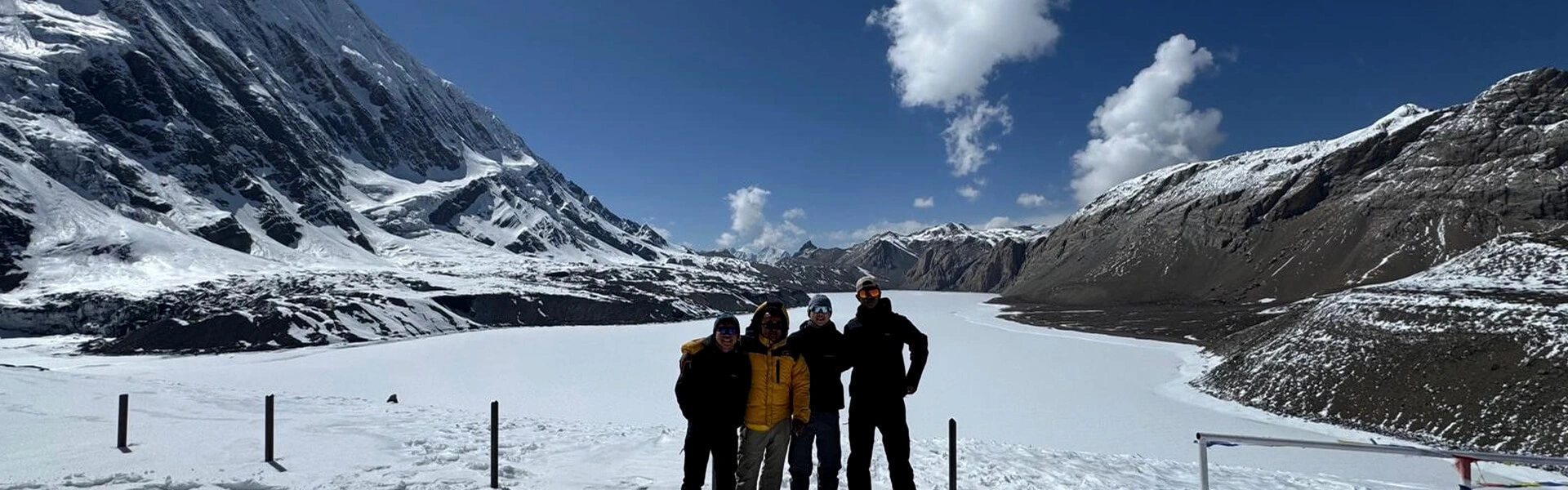
Taken as one of the highest lakes in the world, further held sacred by local pilgrims, both Hindus and Buddhists, Tilicho Lake is located in the Manang District of Gandaki Province, Nepal, within the largest conservation area of the country, the Annapurna Conservation Area. Exactly, it lies north of the mythical Annapurna Massif and is fed by the direct melting of snow from the surrounding mountain peaks such as Tilicho Peak, Kang Sar, and Nilgiri.
Approximately 28.69° N and 83.85° E in coordinates; while there are not any direct road or airway connections to Tilicho Lake, it is still one of the remarkable Himalayan destinations that is easily accessible, to the similar kind of Gokyo Lakes, Shey Phoksundo Lake, and Tsho Rolpa Lake. Yet miles away from chaotic city areas, it does offer you a true natural Himalayan escape, including in the years 2027 and 2028.
What is the Tilicho Lake altitude?
The official height that Tilicho Lake is situated at is 4,919 m/16,138 ft above sea level, nearly 5,000 m, making it one of the highest lakes in the world for its size (4.8 square km/1.9 square miles), a length of about 4 km/2.5 miles, and a width of roughly 1.2 to 1.6 km. What happens around this elevation is that the level of oxygen in the air drops significantly, and on rapid ascent without proper acclimatisation, anyone can spot the symptoms of altitude sickness.
Also, severe forms including acute mountain sickness (AMS), HAPE, and HACE can be fatal if not taken care of on time; the weather at such points remains unpredictable throughout the years, even during the seasons that are typically taken as the prime time for high altitude trekking and climbing in Nepal: spring and autumn. Temperature is also cold and chilly throughout the year; physical exhaustion can get extreme as well.
How is Tilicho Lake Weather?
Yes, Tilicho Lake does experience seasonal variation in weather. Generally, spring (March - May) and autumn (September - November) are known for featuring the most favourable weather for visiting, with clear mountain views, moderate daytime temperatures, and fewer chances of both rainfall and snow. Further in spring, the blooming rhododendrons in lower regions add to the picturesque scenery, and in autumn you can experience the Himalayas dipped in a festive vibe.
In the trans-Himalayan rain shadow area, while the main trekking trail to Tilicho Lake can be taken as one of the best summer high-altitude trek routes in Nepal that receives comparatively less rain, it often rains heavily in the lower region, making it highly risky to journey through between Shree Kharka, Khangsar, and Tilicho Base Camp, the Tilicho Lake landslide area. Likewise, in winter it can get unbearably cold; hence, journeying is usually not recommended.
Tilicho Lake trek distance: Is it far from Pokhara?
Similar to any other Himalayan trips in Nepal, such as the Everest Base Camp Trek, the Annapurna Base Camp Trek, the Langtang Valley Trek, or remote, restricted, and camping treks like the Upper Mustang Valley Trek, the Manaslu Circuit Trek, and the Kanchenjunga Base Camp Trek, the specific Tilicho Lake Trekking distance also varies based on the chosen itinerary. Usually, as a side trip, trekkers cover around 60 - 70 km from the Annapurna Circuit.
Often also referred to as the Tilicho Lake and Thorong La Pass Trek, it is typically a 5-7 day hike from Manang. As per the Pokhara to Tilicho Lake distance, it lies about 55 km north of the city; due to the inaccessibility by road, although the travel distance can get much longer but is still shorter than when you start with a drive from Kathmandu to the trek starting point, Dharapani or Chame. If you are already in Pokhara, it is good to start from here.
Where is the Tilicho Lake landslide area?
The Tilicho Lake Hiking Trail between Shree Kharka and Tilicho Base Camp in general features steep and unstable slopes, which further consist of loose rocks in narrow pathways. These, with a higher risk of falling debris and rockslides, are no doubt one of the most dangerous parts of the entire Himalayan trip to Tilicho Lake, the infamous Tilicho Lake landslide area, for one to remain extra cautious while journeying through.
Try following these safety tips, like starting early in the morning when the air is most stable and the skies are clear. When trekking from these areas, avoid stopping unnecessarily, maintain a safe space between trekkers to not trigger any sort of imbalance, wear a helmet if carrying, stay alert to falling rocks, and last but not least, always listen and follow the footsteps of your local guide. Mind you, they are familiar and trained for these kinds of potential hazards.
Why do locals visit Tilicho Lake in Janai Purnima?
Besides being one of the most stunning natural hidden gems of the Annapurna Himalayas, the Tilicho Lake is regarded as the Kak Bhusundi Lake mentioned in the ancient Hindu mythology, the Ramayana, the place where the Crow deity Kak Bhusundi narrated the epic to the king of birds, Garuda Dev (the vehicle of Lord Vishnu). Around 85 m/279 ft, being the depth of Tilicho Lake, recreational swimming is strictly banned.
A quick dip alone is said to be able to free one from the karmic cycle and help attain liberation, especially during the auspicious occasion of Janai Purnima, which often falls in the months of autumn in October. Hence, it offers a golden opportunity for devotees and a large number of pilgrims to visit the lake and for those keen on real cultural insights. At the heart of the Annapurna Himalayas, soaking in the overflowing spiritual energy.
What are other things to do in Tilicho Lake?
An excellent acclimatisation point during the classic trek to Annapurna Circuit, taking a round trip of the 10th highest mountain peak in the world, Mt. Annapurna (8,091 m), allowing you to stick to the golden rule of hiking up and sleeping low. There is hardly any argument that reaching here itself is an adventure and achievement. It is also an incredible spot to simply admire nature’s grandeur and capture in lenses.
The unique high-altitude landscapes, mixed with towering snow-capped peaks and glacial and rugged terrain around and above, further reflect in the turquoise water of the lake. Postcard-like scenery in every click—Tilicho Lake is a haven for photography enthusiasts. A surreal contrast creates an otherworldly visual, detoxifying from busy modern life, and it's a fantastic place to close your eyes and engage in meditation and spiritual reflection.
Wildlife and Nature Around Tilicho Lake: Is it suitable for wildlife sightseeing?
Although there has not been any record of aquatic life in Tilicho Lake due to its near-freezing water, high elevation, and low nutrients, it is overall a harsh alpine environment for life to survive in. As you trek through the subtropical forests on the initial days, that is when you have a greater chance of wildlife spotting if that is your main intent. The area around the Tilicho Lake is characterised by rugged mountains and sparse vegetation.
So this location itself is best for glacial beauty, with the terrestrial wildlife more prominent in the lowland, midzone, and alpine areas such as Manang and Khangsar, where on a lucky day one may even encounter rare and elusive Himalayan species such as the snow leopard, blue sheep (Bharal), Himalayan marmot, Himalayan musk deer, Himalayan tahr, vulture, and Himalayan griffon, especially when the sacred alpine lake is part of the Annapurna Conservation Area.
Must you add Tilicho Lake to the Annapurna Circuit Trek itinerary?
It is for you to decide whether you want to complete the trek to Tilicho Lake as a single Himalaya trip or as part of the combined Annapurna Circuit Hike. Adventure Himalayan Travels and Treks, managed by Rana Bahadhur Khadka with more than two decades of experience in travel, treks, and expeditions in Nepal, Bhutan, Tibet, Singapore, and also India, can make all the essential arrangements as per your preferences and area of interest.
As per observations from previous Annapurna treks, combining the Annapurna Circuit with Tilicho Lake is one of the most rewarding experiences. Awe-inspiring scenery and some of the closest sights of the Annapurna mountain ranges; after the Thorong La Pass (5,416 m), regarded as the ultimate Annapurna viewpoint after the summit point itself, you have a chance to explore one of Nepal’s best-kept secrets with photographic and acclimatisation opportunities.
Safety Tips for Visiting Tilicho Lake in 2027 and 2028
First and foremost, remember that the journey to Tilicho Lake is that it is one of the best high-altitude trekking and hiking destinations in Nepal, making it essential that your body is well acclimatised to Himalayan surroundings before approaching landmarks at high altitude and trekking days with significant elevation gain. Stay hydrated and eat healthy; it's best if you stick to the vegetarian options such as Dal-Bhat-Tarkari (both nutritious and budget-friendly).
Likewise, it is better to leave the Tilicho Lake Base Camp earlier, even before dawn, to avoid strong afternoon winds and unstable weather and witness the magical sunrise over the crystal-clear water and surrounding peaks. Always listen to your body, monitor the symptoms of altitude sickness, inform your guide immediately, and stop wherever you are. Only guided trekking is allowed; it is best to journey only through licensed agencies or at least hire a local guide.
Conclusion
Tilicho Lake remains one of the spectacular natural treasures high in the Annapurna region of Nepal that offers a fantastic combination of breathtaking mountain scenery, high-altitude adventure, spiritual rejuvenation, and a true remote wilderness. When you learn about the Pokhara to Tilicho Lake distance, the Tilicho Lake trek distance, the depth of the Tilicho Lake, and the best things to do in Tilicho Lake, you are bound to make the best out of it.
Combine it with the classic Annapurna Circuit Trekking or trek to the Tilicho Lake only, with 4.8/5 Google ratings as per 29 reviews, guaranteed premium services at a reasonable price, including for the years 2027 and 2028 with early bird and group with more than 10 members special booking discounts, and reserve your seat now. Join our fixed group departures in spring and autumn or plan private and solo ones; we are here 24/7. Contact us.