Top 10 Places to Visit in Thimphu in 2027 and 2028
Key Facts for Planning Your Trip
- Altitude of Thimphu: The city of Thimphu sits at an altitude of around 2,320 m/7,611 ft above sea level, which, in comparison to the major acclimatisation points that you visit during Nepal treks, such as Namche Bazaar (3,440 m) during the Everest Base Camp Trek, is significantly lower, which also implies that the risk of altitude sickness is lower, especially when you travel via vehicle instead of multi-day trekking.
- Thimphu weather: While Thimphu overall features a subtropical highland climate with variations as per the seasons. Spring comes with clear skies and blooming landscapes; autumn is known for crisp mountain air, longer days, and excellent visibility; winter temperatures often go below the freezing point with occasional snowfall, and in summer one has to be ready for frequent rainfall similar to that in Nepal.
- Temperature in Thimphu: Like weather, the temperature in Thimphu also varies depending on the season. In spring it can measure anywhere between 10°C and 22°C, summer ranges from 15°C to 26°C, autumn 8°C to 22°C, and in winter 2°C to 15°C, making it the coldest season of all. This implies that spring and autumn have the most pleasing temperature and also the stable weather right for Himalayan journeys.
Folk Heritage Museum
Established and inaugurated by Her Majesty the Queen Ashi Dorji Wangmo Wangchuck on July 28, 2001, the Folk Heritage Museum, Thimphu, is a three-story, 19th-century rammed-earth and timber house to visit for a real insight into the authentic local life of Bhutanese people. Unlike several other museums that usually focus on elite or religious artefacts, it highlights local farming tools and household objects with an aim to pass down the indigenous knowledge.
Major Highlights
- Walk through the room setup with traditional household goods such as vintage kitchenware, hand-carved wooden tubs, and ancient farming equipment.
- Observe the cultural demonstrations, such as the demonstration of traditional liquor brewing (Ara), extraction of mustard oil, and pounding of rice in the courtyard.
- Inside the museum is a traditional restaurant to try local specialities such as Ema Datshi (chilli cheese), red rice, or at least a warm suja.
National Institute for Zorig Chusum
Otherwise also referred to as the School of Traditional Arts and Crafts, or the 13 Arts and Crafts Institute, the National Institute for Zorig Chusum is a dream destination. Built in memory of the third king of Bhutan in 1974 with the main intent of preserving and promoting the traditional arts and crafts and creating job opportunities for marginalised communities, observe students learning and engaging in various art forms or simply unwind, soaking in the local vibe.
Major Highlights
- Catch a glimpse of everyday Bhutanese spirituality when locals perform daily Buddhist practices, praying for universal peace and harmony.
- Traditional architecture, Buddhist art (intricate murals and statues), and handmade crafts emphasising cultural preservation, best for carrying as souvenirs.
- Explore the 13 traditional arts like thanka, woodcarving, sculpture, embroidery, and others in artistic processes.
Tashichho Dzong
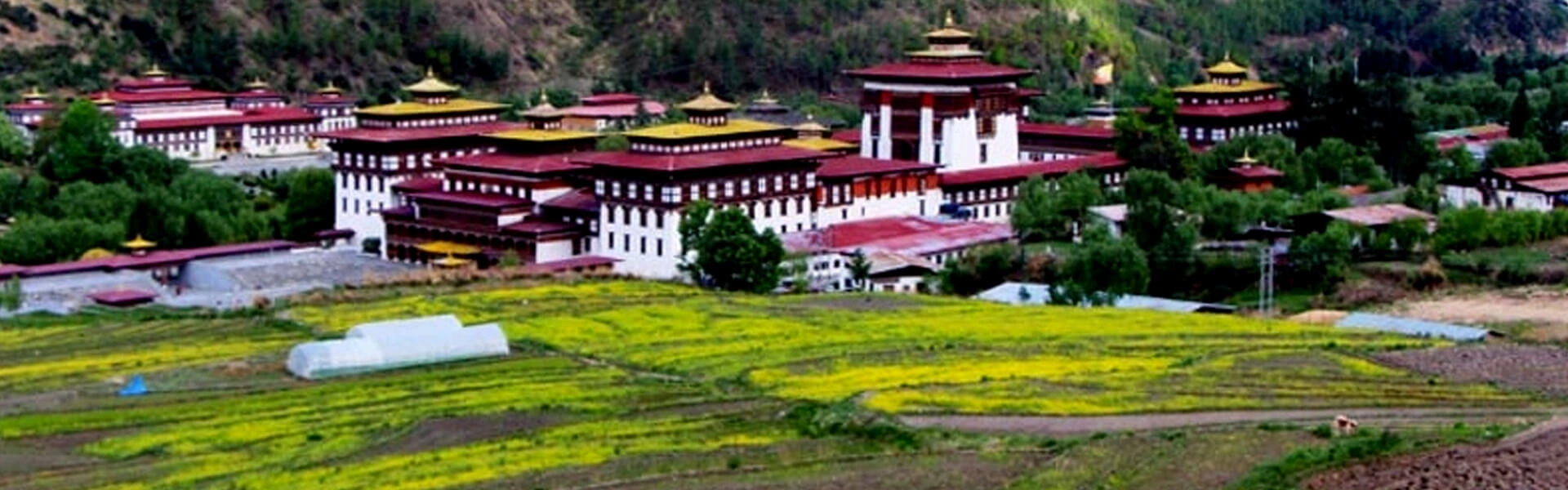
Translating to the Fortress of Glorious Religion, built in 1641 by Zhabdrung Ngawang Namgyel, Tashichho Dzong is yet another main highlight of Thimphu to must not miss, including for the years 2027 and 2028. Serving as the seat of the Bhutanese government, housing the secretariat building, the throne room and the office of the king, and the central monk body, no wonder it is one of the most visited Thimphu Sightseeing places.
What to see?
- The magnificent Bhutanese architecture that features white walls, golden roofs, and beautifully maintained gardens.
- The places with the most important political and religious significance: the throne room and offices of His Majesty the King, alongside government ministries and the monastic body
- Sunset in the evening when the last rays of the sun illuminate the fortress.
Memorial Chorten
At the heart of town, constructed in 1974 as a memorial for the 3rd king of the country, King Jigme Dorji Wangchuck, widely regarded as the father of modern Bhutan, the National Memorial Chorten is one of the most accessible and spiritually important places to visit in Thimphu. Here you can watch local performers kora around the Tibetan-style stupa, along with spinning large red prayer wheels and reciting mantras in peaceful flow.
Why Visit?
- Learn about the Bhutanese Buddhist traditions while the golden spires, intricate religious paintings, and prayer wheels positioned around represent the rich religious and spiritual heritage.
- Enjoy a peaceful urban setting near central Thimphu, not too far from the city but away from the chaotic ambiences.
- An unparalleled cultural insight awaits.
Buddha Dordenma (Thimphu Buddha Point)
No trip to Bhutan is complete without a visit to Buddha Dordenma, often referred to as the Thimphu Buddha Point. Completed in 2015 and perched atop Kuenselphodrang Hill overlooking the valley, the massive golden Buddha statue measuring approximately 54 m tall makes it one of the largest Buddha statues in the world. Surrounded by over 125,000 smaller Buddha statues, it serves as the right place for meditation and mindfulness with a similar viewpoint to Sangaygang.
Major Highlights
- Mindblowing 360-degree panoramic city views precisely during the golden hours of sunrise and sunset, perfect for photography.
- Peaceful meditation halls and prayer wheels to practise mindfulness and other spiritual activities like yoga, praying, or simply get in with the Himalayan air of Bhutan.
- Learn the ancient prophecy from the 8th century connected with the massive bronze statue that is said to bestow blessings, peace, and happiness to those who visit the landmark.
The Paper Factory (Jungshi Handmade Paper Factory)
Likewise, one of the must-do things in Thimphu is visiting the Jungshi Handmade Paper Factory, preserving the handmade paper-making in Bhutan that stems from the 8th century. The craft known as Deh-sho, made from the bark of the Daphne and Dhekap plants, constitutes a valuable national heritage of Bhutanese cultural identity and is preserved through all ages. Meanwhile, the Royal Textile Academy is associated with preserving rich textile heritage.
Major Highlights
- Historic paper-making process and royal textiles that make the national customs Gho and Kira.
- Appreciate the local artisan skills from paper to textiles.
- Perfect for educational exhibits.
Cheri Monastery
For adventurers looking forward to enjoying light trekking with spirituality, the first monastery built in 1620 by Zhabdrung Ngawang Namgyal in Bhutan, Cheri Monastery (Chagri Gompa), serves as one of the main highlights of Thimphu. About 15 km north of the city, 1 hour of uphill walk through the beautiful forests of pine and rhododendron, you would have made it to the place where the first monk's body was established, with an equal chance for wildlife sightseeing.
Major Highlights
- Perfect combo of Bhutan trekking and hiking with spirituality.
- Visit the first monastery in Bhutan where the body of a monk was buried for the very first time.
- Chance to spot the wild blue sheep (Bharal) and deer.
Motithang Takin Preserve
As a wildlife enthusiast wondering where to go, Motithang Takin Preserve is the best tourist place in Thimphu, home to the national animal of Bhutan—the Takin that looks like the combination of a goat and a cow. It ensures you a refreshing break from the cultural sightseeing in Thimphu. Formerly introduced as a mini zoo, it is now a protected habitat that charms nature lovers and photographers alike.
Major Highlights
- Observe Bhutan's national animal, Takin, found in herds at very high altitudes (13,125ft and over), living on a diet of grass and bamboo.
- Serene nature escape surrounded by forests, a perfect spot for photography.
- Fantastic option for an educational experience with families, including children and aged members.
Changangkha Lhakhang
Dating back to the 12th century, probably among the oldest temples in Thimphu, the list of places to go for sightseeing in Thimphu is incomplete without a visit to the Changangkha Lhakhang. On a high ridge overlooking the valley, it, other than being one of the major viewpoints, is what locals consider to be the “Temple of Children," to visit for blessings, naming ceremonies, and other religious rituals related to children.
Key Highlights
- One of the ancient Buddhist heritage sites that showcases the rich and unique traditional Bhutanese architecture.
- A wonderful place to relish the wider and aerial perspective of the Thimphu Valley.
- Take in the aura of the oldest surviving temple in Thimphu from the 12th century.
Thangtong Dewachen(Nunnery)
Founded by Rikey Jadrel in 1976, the one who is considered the emanation of Thangthong Gyalpo (1363–1485), the builder of numerous iron chain bridges across the Himalayas, the Thangtong Dewachen (Nunnery), also known as Zilukha Nunnery, is one of the lesser-known yet deeply rewarding highlights in Thimphu, worth strolling around for deeper insights into Buddhist learning and practice, including for the years 2027 and 2028.
Things to expect
- Tranquil atmosphere not that far away from the city yet perfect for meditation and reflection.
- Spectacular views of the Thimphu Valley, Tashichho Dzong, and other surrounding landscapes.
- Observe the daily life of nuns who have dedicated Buddhist studies, prayers, and rituals, and their life with locals engaged in traditional monastic activities.
Conclusion
Thimphu, with majestic monasteries and giant Buddha statues, a cultural museum, and lively markets that you can visit, is more than just a capital. It is also the gateway to understanding the unique philosophy, traditions, and way of life in the country that is admired across the globe as the first carbon-negative nation and its unique Gross National Happiness (GNH) instead of the Gross Domestic Product (GDP). The city has something for everyone.
The list of the best places to visit in Thimphu in 2027 and 2028 explores the various sides of Bhutan’s capital so you know where to go for more immersive historical, cultural, natural, spiritual, and spectacular scenery and a haven for photography. Or simply book one of our comprehensive Bhutan tour and travel packages, let us know what you are planning for, and enjoy the journey made just for you. Contact us now and reserve your seat.