Where is Pokhara? How far is it from Kathmandu?
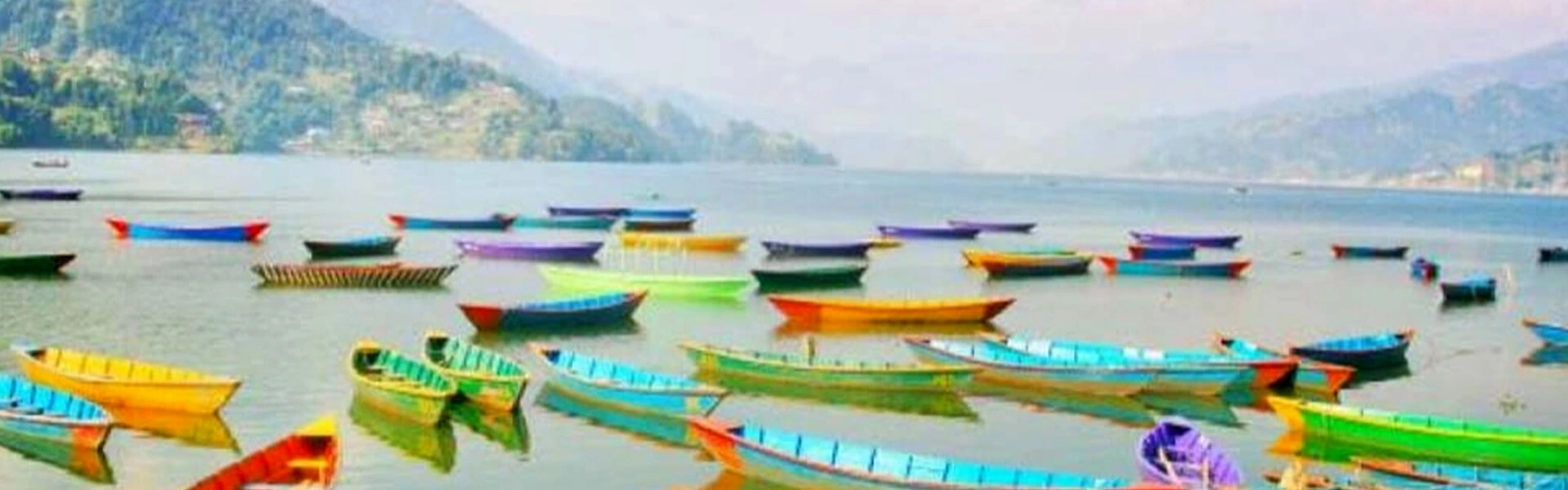
Location-wise, Pokhara is situated in western-central Nepal in Kaski District. Spread over an area of 464.24 square kilometers along the banks of the beautiful and tranquil Phewa Lake, it is the capital of Gandaki Province and is further the largest metropolitan city in Nepal by size. The distance from Kathmandu to Pokhara and vice versa (Pokhara to Kathmandu) is about 200 km (125 miles), with good connections to both road and airways.
From Kathmandu, it is a 6- to 9-hour drive depending on the traffic of the day and road conditions, as often in monsoon season it carries a risk of minor landslides first along the gorge of the Trishuli River and then the Marshyangdi River following the Prithvi Highway. Most of the main highway sections are paved, or you may choose to directly fly to the Pokhara International Airport at Chhinedanda. The Kathmandu to Pokhara flight spans about 25 minutes.
What is the elevation of Pokhara? Is it higher than Kathmandu?
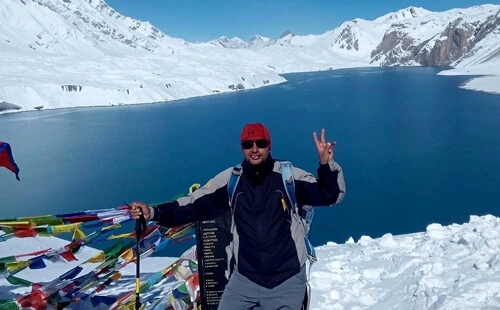
The main city of Pokhara sits at an altitude of around 822 m (2,700 ft) above sea level. This elevation of Pokhara is neither too high nor too low, making it an excellent Himalayan trekking starting point into higher viewpoints such as Sarangkot (1,600 m), World Peace Stupa (1,100 m), Poon Hill (3,210 m), Mohare Danda (3,300 m), and Khopra Danda (3,660 m), even to the Annapurna Base Camp (4,130 m) and Thorong La Pass (5,416 m).
No, in comparison to the capital city of Nepal, Kathmandu (the city of temples, home to 7 of the UNESCO World Heritage Sites), it sits about 600 m lower. I.e., Kathmandu’s altitude is around 1,400 m, and hence it is a lot warmer in Pokhara while still experiencing the awe-inspiring mountain scenery. With iconic Machhapuchhre (Fishtail), Dhaulagiri (8,167 m), Manslu (8,163 m), Gangapurna, Hiunchuli, and Annapurna mountain ranges, it is a haven for mountain lovers.
What is the Nepal Pokhara weather and temperature?
Compared to several of Nepal’s mountain regions, such as the Langtang, Everest, Annapurna, Kanchenjunga, and others, Pokhara sits at lower elevations; due to this, the Pokhara temperature most of the time remains moderate, and so does the weather. Even during the times of the year taken as off-seasons for high-altitude trekking and climbing, when most of the Himalayan regions experience extreme weather and cold temperatures, Pokhara remains approachable.
The average temperature in spring is 15°C – 28°C; that is, summer, autumn, and winter are 20°C – 32°C, 16°C – 27°C, and 7°C – 22°C. I.e., Pokhara temperature is manageable throughout the year, including for family tours and travels, including seniors and kids, especially when you stay and prepare for the seasonal conditions. It is best to include rain gear in summer and dress in layers in winter to stay warm and comfortable.
Who are the locals of Pokhara?
Now home to a diverse mix of ethnic groups of Nepal, including Hill Brahmin, Chhetri (Khas), and Newari, historically, the Gurung and Magar tribes are the one is found to have settled here as early as the 8th and 9th centuries and are still a dominant indigenous community in and around the city of Pokhara. Celebrated worldwide for their rich Gurkha history, to this day you can find numerous young lads serving and competing for it.
Side by side, preserving unique culture, language, festivals, and traditions with close ties to the Annapurna region, Pokhara is equally fascinating in terms of culture as well. Several monuments, such as Tal Barahi Temple, World Peace Pagoda, Gupteshwor Cave, Matepani Gompa, and others representing the region's religious and cultural beliefs, Adventure Himalayan Travels and Treks are happy to offer you a cultural tour book now.
Can you find restaurants in Pokhara?
Yes, it's probably one of the most developed cities of Nepal that can compete with the capital city of Nepal, Kathmandu, from budget-friendly hotels to standard lodges, restaurants, and five-star resorts. You have a great option to choose from as per your interest, preferences, travel goals, and budget. On booking the Nepal Golden Triangle Tour or the Kathmandu Pokhara Tour of 6 days, we ensure you a mid-range place to eat and stay.
If you wish to upgrade to luxury ones, we are also flexible. Pokhara is full of plenty of cafes, bakeries, and rooftop venues perfect for dining with open mountain views and that of Phewa Lake and surroundings; contact us. Let us know how you are planning your holidays in Pokhara, and enjoy our well-crafted itineraries with the best available services at a reasonable cost. More than two decades of experience, personalized trip guaranteed.
Places to visit in Pokhara: What are the major highlights of the city?
The city of Pokhara balances wellness, relaxation, culture, nature, and extreme adventure. So of course, it is no less in terms of landmarks that are at least once must-visit and seen. From the second-largest lake in Nepal, Phewa Lake, to natural caves like the Gupteshwor Mahadev Cave, Mahendra Cave, and Bat Cave (Chamero Gufa), or high-altitude viewpoints such as Sarangkot, here is the list of the top 10 tourist places in Pokhara, including for 2026 and 2027:
Phewa Lake: It is the centerpiece of Pokhara. Spread over an area of 4.43 square kilometers (1.7 square miles), it sits at a serene location framed by the sky and the towering Annapurna range, reflecting in the lake water. Perfect for unwinding both before and after Himalayan trips, or for engaging in a meaningful conversation.
Tal Barahi Temple: At the center of Phewa Lake on a small forested island is the Tal Barahi Temple. Dedicated to Goddess Varahi (one of the manifestations of Goddess Durga), the two-story pagoda is treasured by Hindu devotees across the world, surrounded by calm emerald waters, rich in spiritual energy.
Sarangkot: A 30- to 45-minute or a short 2- to 3-hour nature hike is Sarangkot. A photographer's paradise, as the hill station provides you with a full 360-degree Himalayan panorama, especially scenic during sunrise and sunset. Peaceful, it is also a paragliding launch site, in case you get the last-minute call.
Davis Falls (PataleChango): A unique waterfall where the Pardi Khola river disappears into an underground gorge. Right across the main road from Gupteshwor Cave, originally named “Patale Chango," later on named Davis Falls in 1961 in memory of a Swiss tourist who tragically drowned in the overflow.
World Peace Pagoda (Shanti Stupa): Atop Anadu Hill overlooking both the Pokhara Valley and Phewa Lake, the World Peace Pagoda is a white Buddhist monument famous for its spiritual atmosphere, sweeping views, and 115 ft tall Stupa. It is just the right place to be for meditation and photography in Pokhara.
International Mountain Museum: Near Pokhara Airport is a museum dedicated to history, geology, culture, and mountaineering expeditions, serving as both a cultural and educational attraction of the International Mountain Museum. A visit here is a must to unfold Nepal’s mountaineering heritage and the stories behind the tops of the world.
Gupteshwor Mahadev Cave: One of the country's longest limestone caves that features impressive rock formations, and nearby is the underground waterfall, followed by the shrine dedicated to Lord Shiva, Gupteshwor Mahadev Cave. About 2,950 m from there, the spiral staircase leads down to the main chamber.
Begnas and Rupa Lake: About 15 km east of Lakeside, the Begnas and Rupa are the twin freshwater lakes to visit for a quieter experience than the bustling Phewa Lake. Amidst the beautiful green hills, typical Nepalese villages, and terraced farms, these lakes in Pokhara are perfect for boating, fishing, birdwatching, and nature escapes.
Pumdikot Shiva Statue: In proximity to the World Peace Pagoda is the 108-foot (33 m) seated statue of Lord Shiva, with incredible 360-degree views of the Annapurna range and Pokhara city; it is the Pumdikot Shiva statue. At an elevation of 1,500 m, scenery, spirituality, and pilgrimage—what an incredible blend.
Bindhyabasini Temple: Away from the main tourist areas in Pokhara, above the old Pokhara (Purano Bazaar) on a small hill, is one of the oldest and most revered Hindu temples; it is the Bindhyabasini Temple. Stunning views of Pokhara Valley and surrounding Himalayan peaks- a must-visit for anyone exploring Pokhara.
What are the top outdoor adventures in Pokhara?
Name the adventure you want to achieve and see it come true. Paragliding, ziplining, bungee jumping, ultralight flights, boating, canoeing, or trekking to some of the major cultural destinations like Ghandruk, Muktinath, Tadapani, and also Ghorepani in the Annapurna Himalayas. 3- to 4-hour drive is what it is from Pokhara to Ghandruk, which features traditional stone houses, the Gurung Museum, and more open views of Annapurna South.
Likewise, Muktinath is one of the Char Dhams of the world that is held sacred by both Hindus and Buddhists. In Hinduism, it is believed to be the abode of Lord Vishnu (the god of preserver and protector), and Buddhists regard it to be the place of Avalokiteśvara (the Bodhisattva of Compassion); either way, both are connected to liberation or salvation. You will be delighted to know that it is easily accessible from Pokhara to Muktinath.
Conclusion
The definition of Pokhara is far more than just a gateway to the mountains. Adventure paradise from a Himalayan backdrop, peaceful lakes, thrilling adventure sports, rich culture, and also world-class Himalayan trekking and climbing opportunities—it is an experience, an epitome of adventure, nature, accessibility, comfort, Himalayan beauty, and luxury. The modest elevation of Pokhara and the daily Kathmandu to Pokhara flight leave you dreaming of a return.
The city has something to offer to every traveler. Established in 2011, Adventure Himalayan Travels and Treks has 4.8/5 ratings as per 92 reviews on TripAdvisor. We stand second to none in providing you a memorable Himalayan holiday experience not only in Nepal but also in Bhutan, Tibet, India, and Singapore. Bookings are open for 2026 and 2027. Early bird and special group bookings with more than 10 members are available; reserve your seat now!