Is Tibet a country?
Historically, yes, from the 7th to 9th centuries, Tibet was a powerful independent military power in Asia as the Tibetan Empire, which once challenged the Tang Dynasty in China. Thereafter, from 1912 to 1951, it functioned as a de facto independent state under the 13th Dalai Lama after the collapse of the Qing Dynasty in 1911. In this era that continued for nearly four decades was when it was found to have established its own government.
Although it lacked formal diplomatic recognition from the majority of foreign powers, during this time, Tibet had its own government, currency, army, and postal system, which continue to this day, but now as an autonomous region of the People’s Republic of China (PRC) since the 20th century after the Tibetan delegates signed the Seventeen Point Agreement in Beijing on May 23, 1951, resulting in the formal establishment of the Tibet Autonomous Region in 1965.
Where is Tibet located?
Talking about the geographical location of Tibet, as also mentioned above, it lies on the high plateau between the Kunlun Mountains to the north and the Himalayas to the south, called the Tibetan Plateau. Otherwise also known as the Qinghai-Tibet Plateau, the highest and largest plateau in the world, almost 4 times the size of France, with an average elevation of about 15,000 ft (4,500 m), the nickname roof of the world for Tibet is well earned.
Outside of the Arctic and Antarctic regions, Tibet is the one that consists of colossal reserves of ice and snow, further earning it the title of the third pole, other than making it the major source of Asian rivers: the Yarlung Tsangpo (the Upper Brahmaputra in India, flowing up to Bangladesh). Lhasa is the capital city. If you are looking for Tibet on a world map, it is at the intersection of East Asia, Central Asia, and South Asia.
Where is Tibet in China?
Geographically, the midpoint of South Asia, East Asia, and other Himalayan regions in Central Asia, within the People’s Republic of China, the Tibet Autonomous Region (TAR) falls in the far southwestern part, occupying a large portion of the Qinghai-Tibet Plateau surrounded by four of the major Chinese provinces: the Xinjiang Uyghur Autonomous Region, Qinghai Province, Sichuan Province, and Yunnan Province.
Internationally, the neighboring countries of Tibet are Nepal to the south, India to the south and west, Bhutan to the south, and last but not least, Myanmar (Burma) to the far southeast. Towering Himalayan ranges such as Mt. Everest (8,848.89 m) are what serve as the natural border between Tibet and Nepal, while Himachal Pradesh, Uttarakhand, Sikkim, and Arunachal Pradesh are the territories bordering India from Tibet.
What are the must-see places in Tibet?
While the best tourist attractions in Tibet for you may vary from individual to individual based on your area of interest, travel goals, and preferences, there are places that may cater to a wide range of travelers, visitors, and adventure enthusiasts. Some are even listed as UNESCO World Heritage Sites. Here are the top 5 iconic landmarks that are definitely worth adding to the bucket list, including for the years 2027 and 2028:
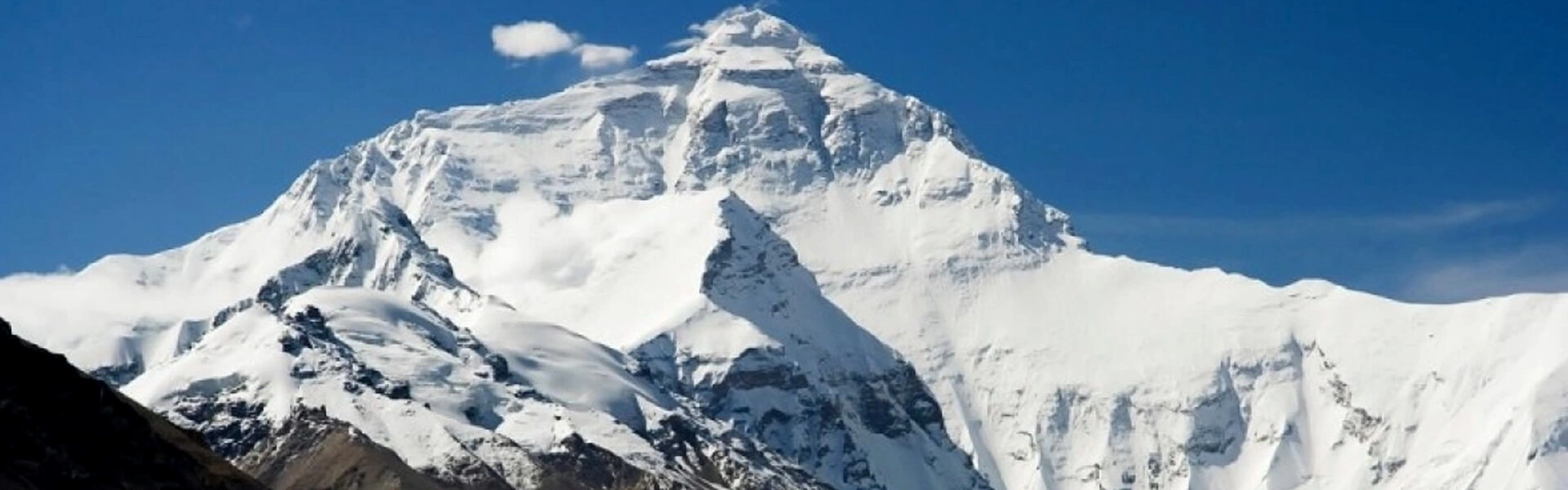
- Everest Base Camp: Many of you might already be familiar with the fact that the north face of the highest mountain peak on earth, Mt. Everest, and its base camp (EBC) lie in Tibet. While a different approach from the classic trails followed by legendary Sir Edmund Hillary and Tenzing Norgay Sherpa, the first ones to successfully make it to the Everest summit, you would definitely not regret visiting the EBC while in Tibet.
- Potala Palace: The most recognizable symbol of the region is the Potala Palace in Tibet, rising above Lhasa on the red mountain known locally as Marpo Ri, overlooking the valley and river of Lhasa. Described as the winter palace of the Dalai Lama since the 7th century, after the King Songtesen Gompa in the 7th century, characterized by the White and Red Palace, it is one of the UNESCO World Heritage Sites from Tibet.
- Lhasa: How could any list of the main highlights of Tibet be completed without mentioning its capital city, Lhasa? Name itself translating to the “place of gods” or the “land of the gods” in the Tibetan language; besides being the centre of political and economic events, it houses a wide number of cultural, religious, and spiritual monuments, such as the Jokhang Temple, Ani Tsankhung Monastery, and others.
- Mount Kailash: Measuring at an elevation of 6,638 m/21,778 ft above sea level, in the remote Ngari Prefecture of far western Tibet near the borders of India and Nepal, although Mount Kailash Tibet is not the highest peak in the Himalayas, it is one of the most cherished mountain ranges at a global level. Locally called Gang Rinpoche, its significance in Hinduism, Buddhism, Jainism, and Bon is what makes it extraordinary.
- Lake Manasarovar: One of the highest freshwater lakes in the world, like the Tilicho Lake, Gokyo Lakes, and Gosaikunda Lake in Nepal, nearby Mount Kailash is Lake Manasarovar. Situated at an elevation of around 4,590 m above sea level, with crystal-clear water and serenity reflecting majestic peaks, it is also held sacred by the above-mentioned four religions for spiritual cleansing.
Things to do in Tibet when visiting
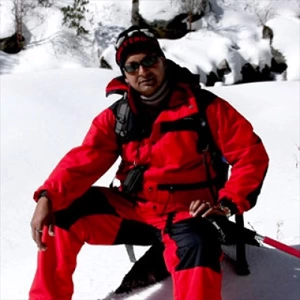
Like the major highlights of Tibet, the best may also vary from person to person. Adventure Himalayan Travels and Treks, with 4.8/5 Google ratings based on 29 reviews, is established and managed by Rana Bahadur Khadka, a veteran mountain guide and adventurer with more than two decades of experience, and is offering you a customizable package. Please let us know your preference, and we will handle all the necessary arrangements.
- Make it to the Everest Base Camp: Embrace the top of the world, Mt. Everest (8,848.86 m), by standing close at its base. The Rombuk Monastery adds to the mysterious vibes with easy accessibility, still with a great sense of adventure and achievement amidst the sky-perching snowy peaks. Rising above all is Everest, the source of inspiration for several adventurers who dare to dream.
- Do that Food tour: No Himalayan trip, whether the Everest Base Camp Trek in Nepal, Bhutan Paramount Tour, or Tibet Tour, is complete without experiencing its local delicacies and hospitality. It helps you to connect with the real roots of the locals who have found joy in the usually arduous high-altitude environment where the temperature can be cold throughout the year regardless of the time of year you are visiting.
- Be part of the vibrant Festival: Observing fascinating festivals is yet another great thing to do during your visit to Tibet. Losar (Tibetan New Year), Saga Dawa, Shoton, and horse race festivals are celebrated with grand ceremonies. Communities come together in their traditional attire, share meals and drinks along with folk music and dance, and some also include sacred rites and rituals.
- Healing Singing Bowl therapy: Ever heard of sound therapy? If spiritual wellness is what you are looking forward to, you will be glad to know that the Tibetan Singing Bowl is one of the highly popular recreational activities to attend. There are also meditations in the Buddhist monasteries, yoga, and mindfulness one can relish to the fullest, along with simple nature walks, learning traditional Tibetan medicine, and so on.
- Complete Kailash Kora: There is a strong belief in all four religions that walking around Mt. Kailash is able to free one from the karmic cycle, purify one's soul, and help in obtaining liberation and nirvana; it is why a Kailash Kora is one of the most recommended and preferred endeavors in Tibet. Even if you are not a devotee while on the round trip, you can witness the various perspectives of the surroundings.
How to get to Tibet?: The Easiest Way
Despite sharing borders with several countries, traveling is allowed only through Nepal and mainland China. By air, the Lhasa Gonggar International Airport is the one that connects you to Chengdu, Beijing, Shanghai, Xian, Kunming, and the city of Kathmandu in Nepal. For those planning to journey via train, the Qinghai-Tibet Railway departing from cities like Xining, Beijing, and Chengdu is best suited for you.
In addition to these, one may also enter Tibet overland from Nepal via the Gyirong (Kerung) border crossing or drive with Adventure Himalayan Travels and Treks, offering exclusive Tibet travel and tour packages such as the Overland Group Joining Tibet with EBC Tour and the Kailash Mansarovar Tour by Overland. Bookings are now open for 2027 and 2028. Premium services at a reasonable package price; a group discount is also available!
Do foreigners need a special permit to visit Tibet?
Yes, in general, almost all the tourists visiting Tibet, except for the nationals from mainland China, Hong Kong, and Macau, must obtain the special Tibet Travel Permit (TTP), other than the Chinese Visa. Please note that free independent travelers and trekkers are banned. Only guided trips through registered travel, trekking, and tour agencies such as Adventure Himalayan Travels and Treks are allowed.
Likewise, if visiting restricted border areas such as the North Everest Base Camp, Mount Kailash, and Nyingchi is on your wishlist, it is for you to make sure you have the supplementary Aliens’ Travel Permits and military clearances. When booking your Tibet travel, treks, and tours with us, we assist you in obtaining the essential documents; our package price includes the cost of permits, and only visas are for you to take care of.
Conclusion
Have no doubt, Tibet is an extraordinary natural landscape where the ancient traditions, spiritual beliefs, and interesting history mingle atop the highest plateau on Earth. The ecological, hydrological, and spiritual heart of High Asia, with ample tourist attractions and things to do, such as visiting the Potala Palace in Tibet, Mount Kailash in Tibet, engaging in Tibetan singing bowls, or taking day or food tours, continues to rise as a global sensation.
Contact us now and share what your dream adventure to Tibet is like. Let us know whether you are keen on discovering the history of Tibet with side trips to historical places describing significant events, simple nature escapes, appreciating Tibet’s unique natural beauty, exploring its capital city Lhasa, or combining it with a Nepal and Bhutan tour; we are here for you. The Tibet Nepal Bhutan Tour, Nepal Tibet Tour, and Tibet Bhutan Tour are happening.