Understanding the Two Viewpoints
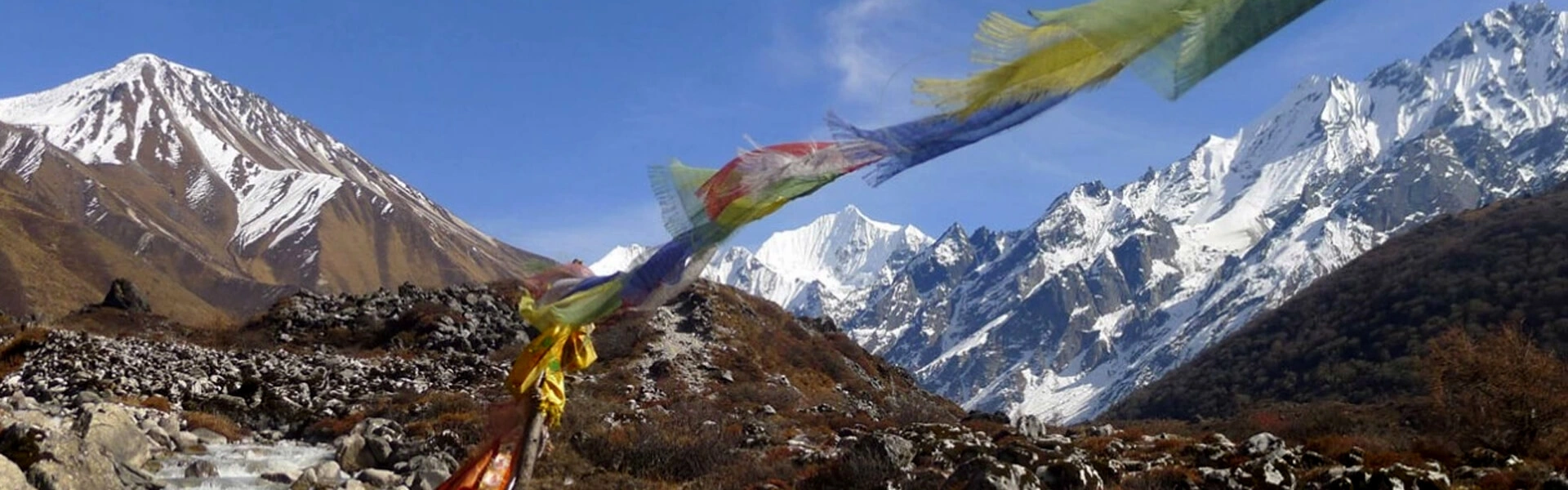
Both located near the Kyanjin Gompa, which is a beautiful traditional mountain village named after the Buddhist monasteries perched above the town, Kyanjin Ri and Tsergo Ri are rocky peaks, often snowy, especially during the months of winter, from December to February. Therefore, both can be added to the Langtang Valley Trek, also referred to as the Langtang Kyanjin Gompa Trek, to choose as per your preferences and physical fitness.
At high altitudes, these are perfect for capturing more open mountain views and especially for proper acclimatization when you descend back to the village to spend the nights. Though not as high as the highest points reached by trekkers on other famous treks in Nepal, such as the Everest Base Camp Trek (5,545 m at Kala Patthar) and the Annapurna Circuit Trek (5,416 m at Thorong La Pass), they are sure to provide a taste of mountaineering side by side.
A quick comparison: The Tale of Two Langtang Peaks
| Feature | Kyanjin Ri | Tsergo Ri (Tserko Ri) |
| Elevation | 4,773 m / lower peak at around 4, 600 m | Between 4,984 m to 5,033 m |
| Starting Point | Kyanjin Gompa | Kyanjin Gompa |
| Duration | 3 - 5 hours round trip | 5 - 7 hours |
| Level of difficulty | Moderate to Challenging | Challenging |
| Terrain Type | Steep switchbacks feature both the grassy and rocky ridges. | Mostly rocky ridges along with boulder fields, slopes, and occasional snow patches. |
| Elevation Gain | Approximately 900 m | Around 1,100+ m |
| Best for | Casual hikers with moderate fitness and limited time. | Seasoned trekkers who enjoy challenges for greater views. |
How is the Tsergo Ri Langtang vs Langtang Kyanjin Ri Height Trail?
Whether you choose to take a side trip to the Tsergo Ri or the Kyanjin Ri, the Kyanjin Gompa village serves as the trek starting point. You should leave early in the morning to avoid the harsh afternoon wind, especially since the route to both of the best Langtang viewpoints typically includes steep ascents followed by descents later on. Do expect walking through the yak-grazing pastures and glacial landscape with open skies at the top.
3,000 m above sea level, where the chances of acute mountain sickness (AMS) prevail, the higher you go, the less the presence of oxygen in the air. The trekking trails to Tsergo Ri and Kyanjin Ri are both physically demanding for sure. But let's not panic yet; the expansive mountain views definitely make up for every hardship you go through. At the centre of the snow-capped mountain peaks in serenity, these also offer you a true nature escape.
Langtang Trek height: What is the Langtang Kyanjin Ri and Tsergo Ri Trek difficulty level?
Yes, you are right; both of the Langtang Valley peaks lie at high altitude. Though one is slightly higher than another, Tsergo Ri (4,984 m to 5,033 m) and Kyanjin Ri (4,600 m to 4,773 m), we never underestimate altitude while in the Himalayas. Excellent to visit for adequate acclimatisation; these are also the places where you watch your steps, maintain your pace, and keep on self-motivating yourself. The weather is often fickle and snowy.
Due to a lack of proper acclimatization, if you ascend rapidly, anyone can suffer from the symptoms of altitude sickness, also called acute mountain sickness (AMS). In addition to this, the changing weather means that having the right gear and equipment is also non-negotiable. As per the overall difficulty level between Tsergo Ri and Kyanjin Ri, as Tsergo Ri lies a bit higher, Kyanjin Gompa to Kyanjin Ri can be considered more doable for beginners.
Which of the viewpoints has the best views between Tsergo Ri and Kyanjin Ri?
The mountains seen from both Kyanjin Ri and Tsergo Ri, although almost similar, have completely different perspectives. If your main focus is purely the epic mountain views, Tsergo Ri (Tserko Ri Langtang) has more advantages. Langtang Lirung (7,227 m/23,711 ft), Dorje Lakpa (6,966 m/22,854 ft), Langtang Ri, locally also called Gangchempo (6,387 m/20,955 ft), Yala Peak, and Shishapangma (8,027 m/26,335 ft) stretched across Tibet, and others.
The views from here, whether of the green valleys below or majestic snow-capped mountain peaks and glaciers above, Tsergo Ri offers the widest 360-degree sight, the grandest panorama, during the Langtang Valley trek. But if you are keen on the dramatic one, the Kyanjin Ri peak is at an advantage. It is the Langtang Valley viewpoint that offers an effort-to-reward ratio. Closer-up views of Langtang Himalayan peaks and glaciers with comparatively less effort.
When is the best time to trek to the Langtang Valley height?
If you are someone fond of the magical golden hues, no wonder the times of sunrise and sunset are what you have to look forward to, including those on the Langtang Valley hiking journey. For this, you either wake up early in the morning before dawn or you begin early in the evening before the time of sunset. However, if you are planning to return to the village with safer trails, clear weather, and calm wind, the best time to visit the Langtang heights is in the morning.
From both of the Langtang Valley viewpoints, Tsergo Ri or Kyanjin Ri, on the summit day, the hiking begins earlier than usual so that you witness the first rays of sun make the region come alive, from mountains to Himalayan wildlife, green valleys, and locals. From complete serenity to gradually increasing chirps of birds and the hum in the Buddhist monastery just below the peaks, it is something that is felt from inside, a soul-cleansing experience for many.
Can You Hike Both Tsergo Ri and Kyanjin Ri in a single Langtang Trip?
Why choose Tsergo Ri vs. Kyanjin Ri in Langtang when you can attempt both? It is enjoyable for seasoned trekkers used to high-altitude trekking and climbing conditions in Nepal and those with previous records of expeditions. As both lie at significant altitudes and can be tougher to hike on the same days, it is best that you go on separate days, and it is not recommended for absolute beginners or those suffering from issues with knees, lungs, or other permanent illnesses.
Unless you have prepared for the potential Himalayan challenges, such as tough terrains, unpredictable Himalayan weather, steep climbs and downhill walks, and basic living standards with minimal modern facilities, it is not recommended for complete first-timers trekking in the Nepalese Himalayas for the very first time. However, it can be a completely different story and experience for experienced trekkers and climbers.
How do these viewpoints fit into the Langtang Gosaikunda Lake Trek?
Gosaikunda, other than being one of the incredible hidden gems of the Langtang trekking and climbing regions of Nepal, a high-altitude glacial lake, is one of the places that are held sacred by both Hindus and Buddhists across the globe. Sitting at around 4,380 m / 14,370 ft above sea level, the crossing of the Lauribina La Pass is what makes it a strenuous endeavor, which is still one of the major spiritual and religious epicenters in the Langtang Valley.
Especially during the time of Janai Purnima, which often falls in the month of August, the lake is believed to be blessed with divine powers. Many consider dipping into the lake at this time helps to cleanse one's karma, purifies the soul, and helps to attain salvation. And during the combined Langtang Valley Trek with Gosaikunda Lake, if you visit any of the peaks, Tsergo Ri or Kyanjin Ri, it helps you make up your mind about what awaits you during the journey ahead.
Where to go after the Langtang Valley Trek with a side trip to Kyanjin Ri or Tsergo Ri?
Other than the Gosaikunda Lake, within the Langtang trekking and climbing region, there is the Tamang Heritage Trek Trail and Helambu Trek. You can go for an authentic cultural experience after the Langtang Trek with a side trip to Tsergo Ri or Kyanjin Ri. For a journey with a taste of mountaineering, there is the Ganesh Himal Singla Pass Trek and the Jugal Himal Panch Pokhari Trek into one of the least trodden parts of the region.
If fond of a similar kind of beginner-friendly short trek with moderate altitude into other Himalayan zones of Nepal, you would love the Ghorepani Poon Hill Trek, Khopra Danda Trek, and Mohare Danda Trek, which are famous for panoramic views of Mt. Annapurna (8,091 m), the 10th highest mountain peak in the world. Then, in the restricted area of Manaslu, are the Tsum Valley Trek, the Nar Phu Valley Trek, or the adventurous Manaslu Circuit Trek.
What are the essential safety tips for trekking to the Langtang Viewpoint?
Whether you choose to go on a hike to Kyanjin Ri or Tsergo Ri, there are some pieces of advice and tips that you can follow to make the best out of it. First of all, it is best to start before the sun so that you neither miss out on the stunning sunrise views nor have to be concerned about the cloudy, windy, and misty early afternoon. Likewise, do not forget to keep yourself hydrated as much as possible and also fuel yourself with ample protein and carbohydrates.
Since there are hardly any proper teahouses on the way, it is best to carry energy bars, dried fruits, and at least 2 to 3 L of water from the Kyanjin Gompa. Similarly, the temperatures across the ridges both at and nearby Kyanjin Ri and Tsergo Ri can quickly drop, so do pack extra layers. With a down jacket, beanie, gloves, and windproof shell, the Kyanjin Gompa to Kyanjin Ri or Tsergo Ri trek is bound to have an enhanced sunrise view experience.
Conclusion: Kyanjin Ri or Tsergo Ri?
At last, for Tsergo Ri vs. Kyanjin Ri in Langtang, it is for you to pick. Adventure Himalayan Travels and Treks is one of the licensed trekking and tour operators in Nepal with more than two decades of experience; whether you choose to go to Kyanjin Ri or Tsergo Ri, we can make all the essential arrangements for you. Being less demanding, if you are a first-timer and unsure about high-altitude endurance, Kyanjin Ri lets you get a grip of the Himalayas without risk.
I.e., perched relatively at a higher altitude, Tsergo Ri is ideal for someone who enjoys the challenges that come with trekking in the Himalayas for equally rewarding views and serene experiences in the upper Langtang Valley. Or combine both and see what the best Langtang Valley viewpoints, the Langtang Heights, have to offer. Bookings are now open for 2026 and 2027. Contact us now for a journey where your interests and travel goals are a priority!